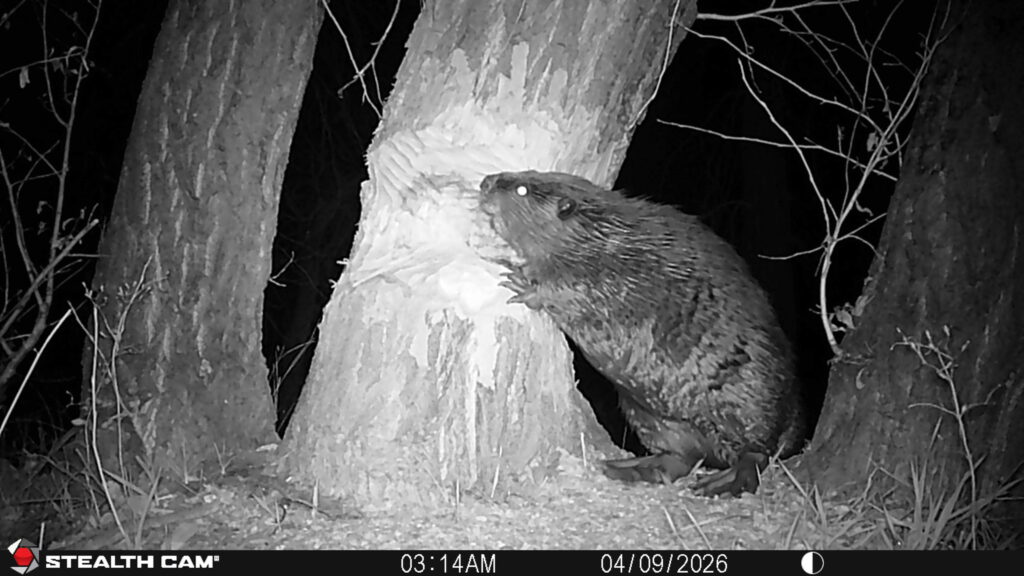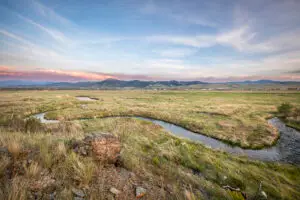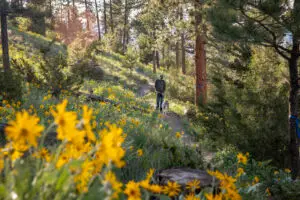
This past autumn, I frequented The Grove, a beautifully restored Superfund site and the perfect place to bring my young students to demonstrate the magic of restoration and creek revival. As we walked through native grasses and paths littered with decaying leaves, I encouraged them to look for clues about what types of creatures and habitats might be hiding in plain sight. I noticed clues of my own: a drying creek channel, cottonwoods stripped of bark, and piles of fresh wood chips scattered beneath gnawed trees. Beavers were near.
As the days grew shorter, I continued returning on my own to watch their progress. One day, I hiked upstream, bushwacking through willows and riparian brush until I discovered a well-constructed, newly built dam. North American beavers build watertight dams from sticks and reeds, using mud to caulk gaps and holes. The dams create ponds and waterways that allow the beavers to move safely through the wetlands.
Over the following weeks, I watched the ponds expand as water slowly flooded the surrounding land. Still, I had yet to find a lodge where beavers lived with their colony, a small family group made up of an adult pair and their young. Beavers are incredible architects, designing their lodges for safety, rest, and food storage. Most lodges have two underwater entrances that give these semiaquatic mammals access even when their ponds and streams have iced over. The submerged entrances also help protect them from predators. Inside are two main areas: a large dry room for living and sleeping, and a mud room or cache that serves as a pantry. Throughout the fall, beavers harvest sticks, shrubs, bark, grasses, and aquatic plants to nourish them through the long winter months.
On a crisp October evening, I decided it was time to meet the family I had been tracking all season. I left an hour before sunset and followed along the now familiar creek corridor lined with willows until I reached the grove of cottonwoods bursting with golden leaves that glimmered in the twilight. Near the main pond above the dam, I settled quietly and marveled at how quickly the land had been transformed. In just a few weeks, the area had become a diverse wetland with a myriad of ponds supporting abundant wildlife.
As the sun was setting, I began to lose hope of catching a glimpse of any of the nocturnal creatures responsible for the new habitat. Then the water stirred.
I watched in awe as a baby beaver swam toward me, nearly a foot long, its flat black tail gliding smoothly through the current. It circled in front of me three times before disappearing back under the water. Walking back down the path and into the fading October light, I pulled my coat tighter, but inside I felt warm.
Audra Shropshire is the education coordinator for PPLT.