If, while driving through the countryside, you wince whenever a newly built mansion on a hillside comes into view, there may be some very real psychological reasons for your reaction.
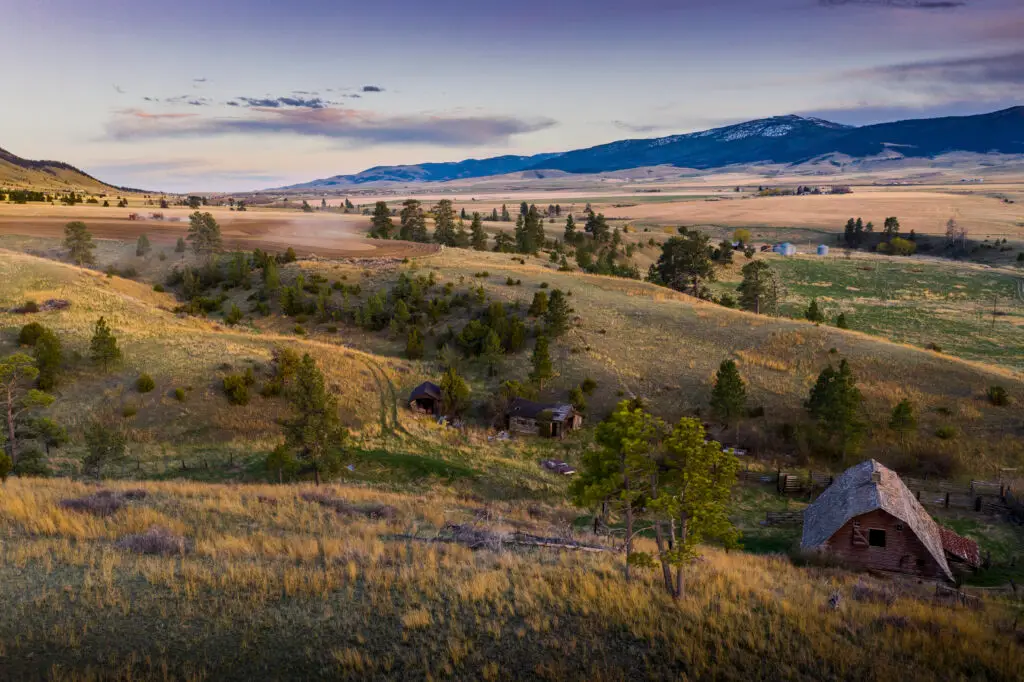
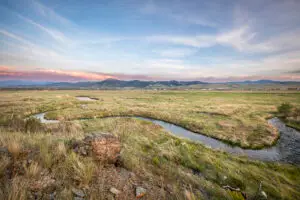
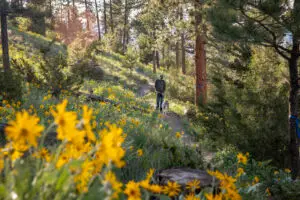
As anyone who enjoys a road trip through Montana will attest, undeveloped viewsheds can soothe the nervous system. The state’s sweeping vistas offer a sense of expansiveness, where not only the eye but also the soul can escape the four walls of daily life. In his popular podcast “Huberman Lab,” Stanford neuroscientist Andrew Huberman says such “panoramic visions” are associated with calmness and stress reduction. He contrasts them with “focal vision,” which rewards attention narrowly focused on tasks within our immediate grasp, done mainly to increase productivity.
According to psychologists, one reason we find broad vistas soothing may be that humans evolved over hundreds of thousands of years looking far away, scanning the African veldt for game to hunt and predators to avoid. “The health of the eye demands a horizon,” wrote Ralph Waldo Emerson.
That tranquility can be severed when houses and other structures dot the landscape. In his new book, Nature and the Mind, University of Chicago psychology professor Dr. Marc Berman describes nature as being “softly fascinating.” That means it “gently stimulates our attention”—think watching a red-tailed hawk circling overhead—compared to urban environments, where traffic, noise, and billboards demand our vigilance in a way that depletes us.
Similarly, the slope of a mountain or sweep of a river may be easier for our brains to process than the 90-degree corners of a building. Natural shapes “might give our brains a rest, and that’s why we might see these benefits,” Berman writes. That could explain the unease that comes from seeing large houses jutting up from grasslands, rolling hills, or mountain ridges.
Alienation from the land
Another reason people may recoil from new housing in rural areas is apprehension over change. “Rural gentrification” can reflect how an area’s traditional ag-based culture, values, and economy are disappearing, replaced by commuters from nearby cities and “second-homers” from other states. Some extravagant vacation homes, priced well beyond the means of long-time residents, sit empty for months each year, further eroding the sense of community in areas where people have worked and lived for generations.
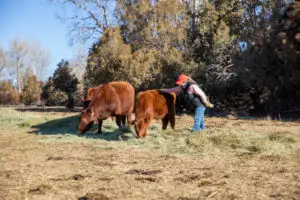
Wendell Berry decried this shift across the United States as a growing alienation from the land and its care. A working ranch or farmhouse with nearby outbuildings represents an agrarian ideal rooted in respect for limits, commitment to place, and interdependence between humans and the natural world. Newcomers who build mountaintop mansions may fail to establish those relationships and even shun local residents and norms.
Fortunately, there’s a proven method driven by local residents to help protect the integrity of selected lands: conservation easements. These voluntary legal agreements between landowners and land trust nonprofits or public land management agencies protect conservation values like wildlife habitat, working lands, and natural viewsheds.
For instance, the Potter Ranch, located east of Helena, makes up a substantial portion of the Spokane Hills. It’s one of the largest working ranches in the Helena Valley and it’s a key piece of the public viewshed, visible from both Mount Helena and the Sleeping Giant. When the Potter family faced intense pressure to subdivide the 3,100-acre property, they sought a PPLT conservation easement to keep the working lands and open spaces intact. The project was supported by the Lewis and Clark County Open Space Bond.
In the Helena Valley and across Montana, easements like the one at Potter Ranch offer those driving past a few moments of calm, stability, and beauty amid our chaotic modern world.
Tom Dickson is an editor and writer based in Helena.